
It’s 7 o’clock in the evening, and your child wants the tablet again — not the toy box gathering dust in the corner. If this sounds familiar, you’re not alone. Most parents in Pakistan hit this exact moment almost daily, and it’s usually not because kids dislike toys. It’s because the toy sitting in that box isn’t holding their attention the way a screen does.
The good news is that this is fixable. Not every toy is built the same way, and once you understand what actually keeps a child engaged, shopping gets a lot easier. This guide walks through educational toys for kids in Pakistan, age by age, so you can spend your money on things your child will genuinely use — not toys that get played with once and forgotten.
By the end, you’ll know what to look for at each stage, which mistakes waste money, and how to keep your child interested without turning every purchase into a guessing game.
Why the “Right” Toy Matters More Than an Expensive One
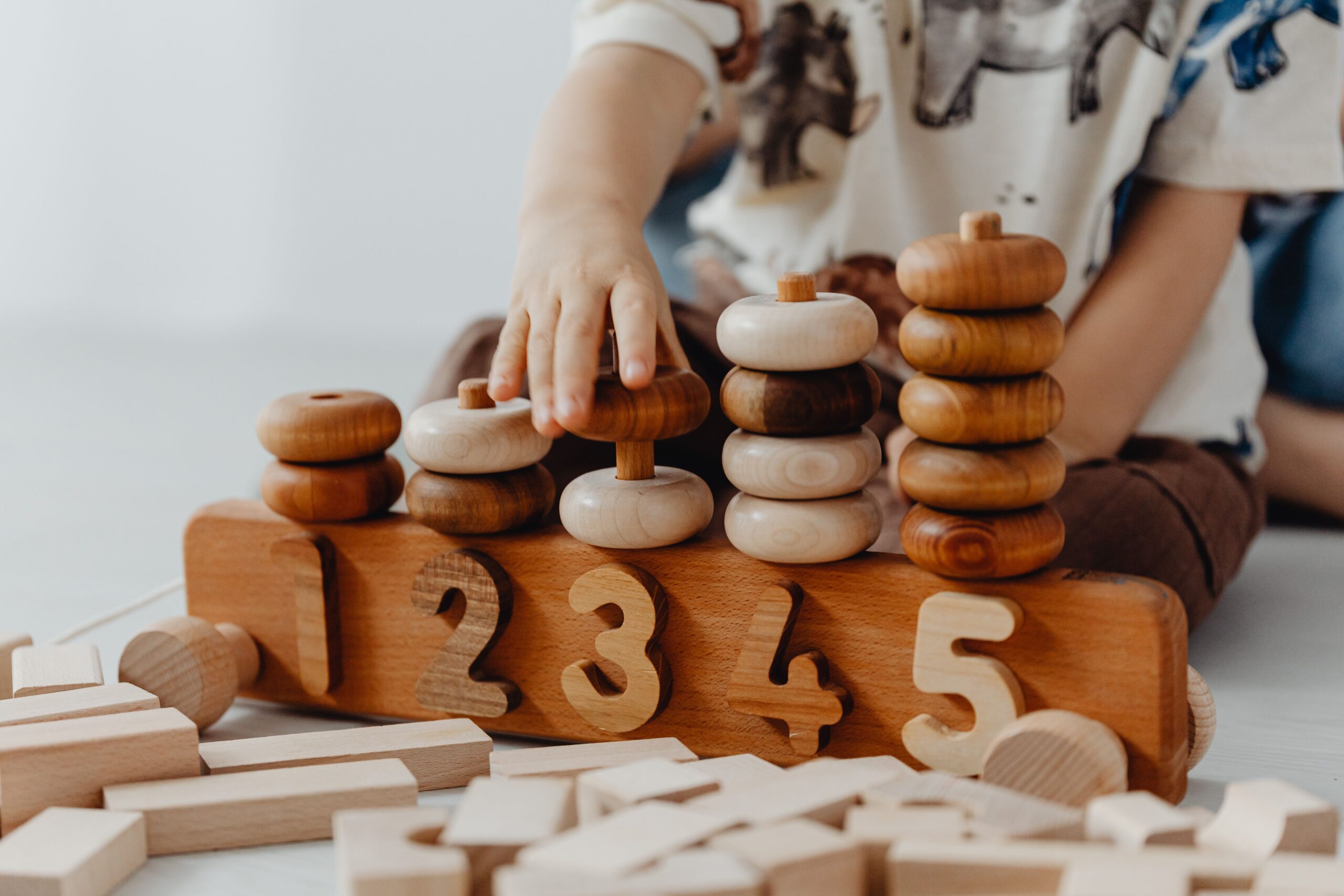
A toy’s price tag doesn’t tell you much about how useful it actually is. Some of the most effective educational toys for kids in Pakistan cost less than a family meal out — a set of wooden blocks, a simple puzzle, a shape sorter. What matters more than price is whether the toy is “open-ended,” meaning your child can use it in more than one way.
Think about a doll that says three phrases when you press its hand, compared to a set of building blocks. The doll gets interesting for a week, then goes quiet in a drawer. The blocks become a tower one day, a bridge the next, and a “shop” for pretend play after that. Open-ended toys grow with a child’s imagination instead of running out of surprises.
There’s also a case for a little boredom. Many parenting experts point out that constant stimulation — toys that do everything for a child — can reduce the need to imagine anything at all. A child staring at a pile of blocks for a moment before deciding what to build is doing more mental work than a child simply watching a toy perform on its own.
None of this means electronic or “smart” toys are bad — some genuinely help with language exposure. It just means flashing lights and sound effects don’t automatically equal learning. Often, the simpler toy does more work.
What to Check Before You Buy
Before adding anything to your cart, it helps to slow down and check a few basics — especially online, where you can’t hold the toy first.
Start with the age label on the packaging or product page. These aren’t random numbers; they usually reflect both safety and how likely a child that age is to actually enjoy the toy. A puzzle made for a 5-year-old will just frustrate a 2-year-old.
Next, check the materials. For babies and toddlers especially, look for non-toxic paint or BPA-free plastic, since young children explore everything with their mouths. For older kids, durability matters more — a toy that survives being dropped, sat on, or fought over by siblings is worth more than one that looks nicer but breaks in a week.
A few more things worth two minutes of checking:
- Whether the seller offers Cash on Delivery, which most Pakistani buyers still prefer for a first purchase from a new store
- The return or exchange policy, in case the toy doesn’t suit your child once it arrives
- Clear, real product photos showing size — toys arriving smaller than expected is a common online-shopping complaint
- Seller reviews, if available, particularly for smaller or newer sellers
Delivery timelines are worth keeping in mind too. Depending on your city, delivery across Pakistan can take anywhere from a couple of days to about a week, so it’s worth ordering ahead of a birthday rather than a day or two before. If you’re shopping on KidoJoyBox, our Educational Toys category is filtered by age, which saves you from scrolling through toys that don’t match your child’s stage yet.
Educational Toys for Kids in Pakistan, Age by Age
Newborns and Babies (0–12 Months)
At this age, “educational” simply means giving your baby’s senses something to explore. Babies aren’t ready for lessons — they’re building the foundation for everything that comes later, through touch, sound, and sight.
A soft rattle, a fabric ball with a bell inside, or a set of stacking rings are all reasonable starting points. High-contrast board books — black, white, and red patterns — are especially useful in the first few months, since a newborn’s eyesight isn’t developed enough yet to notice softer colours clearly.
Safety matters more here than at any other age. Avoid anything with small, detachable parts, and always supervise playtime — even toys labelled “safe for babies” should be checked by hand for loose seams or pieces that could come off. Our Baby Products section is a reasonable starting point if you’re shopping specifically for this age group.
Toddlers (1–3 Years)
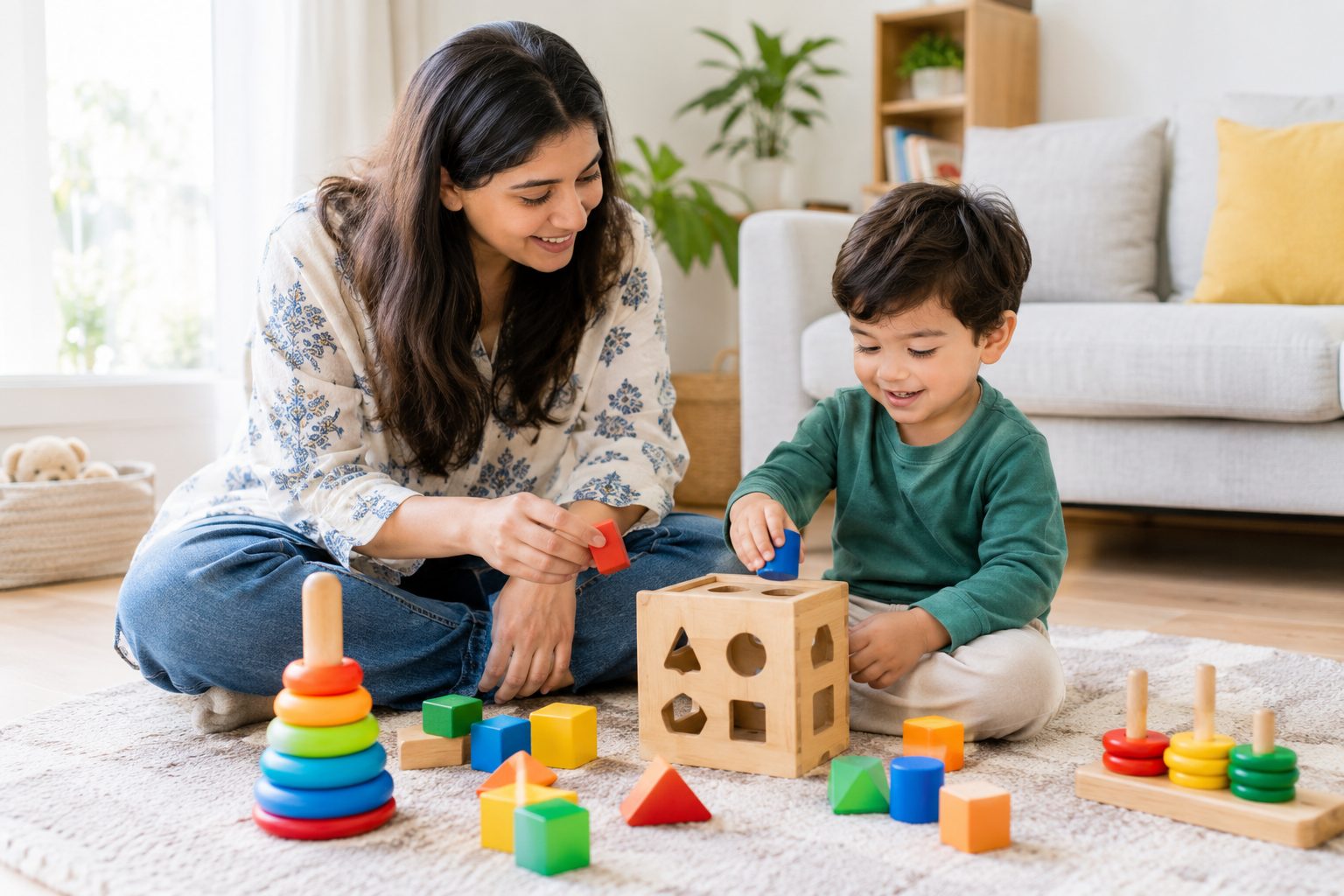
Once your child starts walking and saying their first words, play changes completely. Toddlers are curious about cause and effect — press this, and that happens — and they’re also starting to test limits, which is exactly why shape sorters and simple puzzles work so well. Every “wrong” attempt teaches them something without a parent needing to explain it.
A shape sorter with four or five large pieces is often more useful than one with fifteen small ones — too many options at once can overwhelm a toddler rather than engage them. The same goes for toys packed with buttons, lights, and sounds; some toddlers get overstimulated rather than entertained.
Push-and-pull toys are also worth considering, since they support walking confidence while keeping toddlers active indoors — useful during the hotter months when outdoor play isn’t always practical. Building blocks remain one of the most reliable choices at this stage too, and you’ll find a wide range in our Building Blocks collection.
Preschoolers (3–5 Years)
Picture a 4-year-old setting up a pretend “shop,” lining up toy vegetables, and insisting you pay in fake money before you can leave with your groceries. That’s not just play — it’s language practice, early maths, and social skills happening at once, without your child realising it’s “learning.”
This is the age where pretend-play sets — kitchen sets, doctor kits, grocery sets — genuinely earn their price. Alphabet and number puzzles also start making more sense now, since preschoolers can hold a short sequence in their head and match pieces to it. Simple art and craft supplies — crayons, safe scissors, sticker sets — support fine motor control, which matters for handwriting readiness before school starts.
If your child is due to start school soon, it’s worth browsing our School Supplies section alongside toys, since the transition often goes more smoothly when a child is already comfortable holding pencils and following simple instructions.
School-Age Kids (6–12 Years)
Once children are in school, toys can either compete with homework and screens or support what they’re already learning. STEM kits — simple circuits, magnet sets, basic robotics — tend to work well here because they give kids a hands-on version of ideas they’re starting to hear about in science class.
Board games deserve a separate mention, since Pakistani households often underuse them. A good strategy or memory game does something a tablet game rarely does: it teaches a child to lose occasionally and try again, in front of family, without a screen mediating the experience.
If you’re trying to reduce your child’s screen time specifically, our earlier article on Why Educational Toys Are Better Than Screen Time goes into more detail on making that shift without turning it into a daily argument.
Common Mistakes Parents Make When Buying Toys
A few patterns show up again and again when parents shop for toys, and most are easy to avoid once you’re aware of them.
Buying for the age you wish your child were, not the age they are. It’s tempting to buy a slightly “advanced” toy so it “lasts longer,” but a toy that’s too difficult usually gets abandoned rather than grown into.
Buying too many toys at once. A child with ten new toys often plays with none of them deeply — attention gets split, and nothing holds interest long enough to become genuinely engaging. One or two well-chosen toys usually outperform a large haul.
Judging a toy by its packaging. Bright boxes and bold “educational!” labels don’t guarantee anything. It’s worth reading the actual product description to understand what skill the toy is meant to build, rather than trusting the packaging alone.
Skipping the return policy. Toys sometimes don’t match expectations — wrong size, wrong difficulty, or simply not to a child’s taste. Buying from a seller with a clear exchange policy saves you from being stuck with something unused.
Ignoring battery safety on electronic toys. For toys with battery compartments, check that they’re secured with a screw, not just a snap-shut lid, especially for toddlers who explore everything by hand and mouth.
Safety Considerations Worth Taking Seriously
Safety with toys isn’t about being overly cautious — it’s about a few consistent habits that reduce real risks.
For children under 3, a common rule of thumb many parents use is the “toilet paper roll test”: if a toy or toy part fits inside a toilet paper roll, it’s a choking risk and shouldn’t be given to a young child unsupervised. This applies to small parts on puzzles, doll accessories, and building block pieces.
Check stitching and seams on plush toys and dolls regularly, especially once they’ve been through a few wash cycles or rough play sessions. A small tear can quickly turn into a bigger issue if stuffing or small components come loose.
For toys involving batteries, magnets, or small tools — craft kits, science kits — read the age recommendation carefully. These limits usually exist because of the materials involved, not just difficulty level.
If a toy is being passed down from an older sibling, a cousin, or a secondhand source, give it the same safety check you’d give a new one. Small parts loosen over time, and paint or coatings can wear off with years of use, especially on toys from lesser-known manufacturers.
Getting More Value for Your Money
Toy shopping doesn’t have to mean constant new purchases. A few habits can stretch your budget considerably, which matters in a market where prices for imported or branded toys add up quickly.
Toy rotation is one of the simplest tricks: instead of keeping every toy accessible at once, put half of them away and swap them out every few weeks. Toys that seemed “boring” often become interesting again simply by disappearing for a while.
Multi-use toys are worth prioritising over single-purpose ones. A basic set of blocks or a craft box tends to get more total playtime over a year than a toy that does exactly one thing.
Timing purchases around sales — back-to-school season, Eid, or year-end clearance — can meaningfully lower your cost per toy without lowering quality. Our Deals & Offers page is usually worth checking before a purchase rather than after.
Sharing toys between siblings or cousins is common in Pakistani households anyway, and it’s genuinely one of the most sustainable ways to get more use out of durable toys like building blocks, which tend to survive multiple children without much wear.
It’s also fine to mix store-bought toys with things already at home. A cardboard box, a set of steel kitchen bowls, or old dupattas for a pretend “shop” can extend imaginative play just as well as anything bought specifically for that purpose — the goal is engaged play, not necessarily a full toy box.
Final Thoughts
There’s no single “perfect” toy that works for every child, but there is one principle that holds up across every age: a toy that lets your child do something, rather than just watch or press a button, tends to hold up better over time. That’s really the core idea behind choosing good educational toys for kids in Pakistan — usefulness over flash, every time.
If you’re just starting to build up your child’s toy collection, our Educational Toys and Learning Toys categories are organised by age, so you can shop for what your child needs right now rather than guessing.
Frequently Asked Questions
1. At what age should a child start using educational toys?
There’s no fixed starting age — even newborns benefit from simple sensory toys like rattles and high-contrast books. “Educational” toys just look different depending on the age.
2. Are expensive toys always better for learning?
Not necessarily. Price often reflects branding and materials more than actual learning value. Many affordable toys, like wooden blocks or simple puzzles, offer strong developmental value for their cost.
3. How can I tell if a toy is safe for my toddler?
Check the age label, avoid small detachable parts (the toilet-paper-roll test is a useful rough guide), and inspect for loose seams or sharp edges before handing it over.
4. What are good educational toys for a 3-year-old in Pakistan?
Pretend-play sets, alphabet or number puzzles, and simple building blocks tend to work well at this age, since preschoolers are ready for short sequences and imaginative play.
5. How many toys does a child actually need at once?
Fewer than most parents assume. A small rotation of two or three active toys, refreshed every few weeks, usually holds a child’s attention better than a large pile of options.
6. Can screen-based learning apps replace physical toys?
They can complement physical play but aren’t a full replacement — hands-on toys build fine motor skills and real-world problem-solving that a screen can’t replicate the same way.
7. Is Cash on Delivery available for toy orders in Pakistan?
Most Pakistani toy retailers, including KidoJoyBox, offer COD on eligible orders — it’s worth confirming availability for your city at checkout.