

A guide for every Pakistani parent who wants the best for their child’s future
The Scene Every Pakistani Parent Knows
It is 6 in the evening. You just came home from a long day of work. Your child is sitting on the sofa, eyes fixed on a tablet or phone, watching cartoons or playing a mobile game. They are quiet. They are not bothering anyone. For a tired parent, this feels like a blessing.
But deep inside, a small worry stays with you. Is this too much screen time? Is my child learning anything? Am I doing the right thing?
If you have ever felt this way, you are not alone. Millions of Pakistani parents face this same question every single day. And the good news is — there is a better way. A way that keeps your child happy, busy, AND helps their brain grow at the same time.
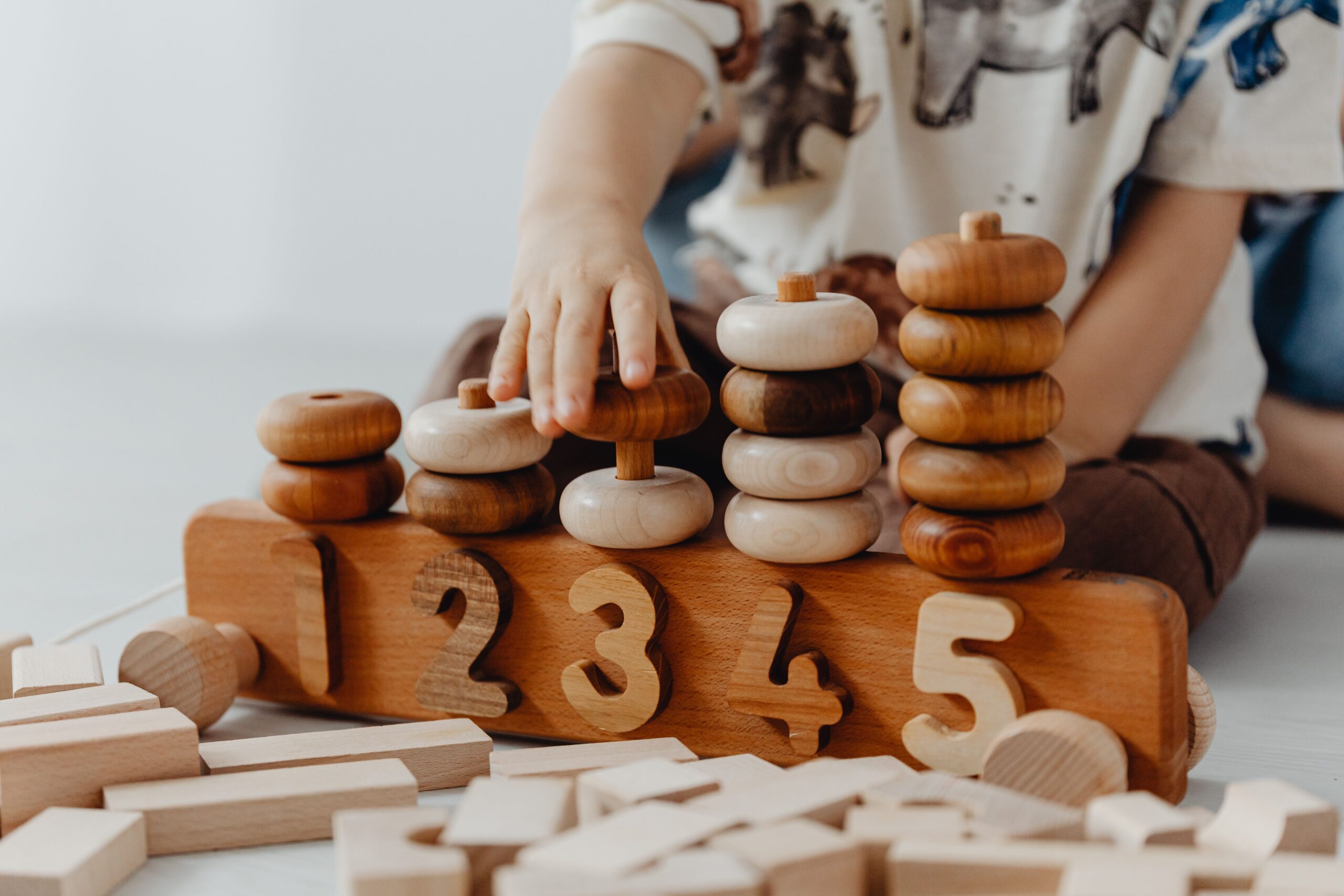
That way is educational toys.
In this article, we will talk about why educational toys are so much better than screen time, what the science says, and how you as a Pakistani parent can make simple changes that will benefit your child for life.
First, Let’s Talk About Screen Time in Pakistan
Pakistan has seen a huge jump in smartphone and tablet use over the last ten years. Today, even children in small cities and towns have easy access to YouTube, TikTok, and mobile games. Many families use screens as a way to keep children busy while parents work, cook, or rest.
According to research, Pakistani children between the ages of 2 and 12 are spending anywhere from 3 to 6 hours per day on screens. That is a very large number — especially for young children whose brains are still growing and developing.
The World Health Organization (WHO) recommends:
- Children under 2 years: No screen time at all (except video calls with family)
- Children aged 2–5 years: Maximum 1 hour per day
- Children aged 6 and above: Limited screen time with a focus on quality content
Most Pakistani children are getting far more than this. And while some screen content can be educational, the way a child interacts with a screen is very different from the way they interact with a toy, a puzzle, or a building block.
What Happens in a Child’s Brain During Screen Time?
To understand why educational toys are better, we first need to understand what happens when a child watches a screen.
When a child watches fast-moving cartoons or plays a simple mobile game, the brain gets a quick burst of excitement. Bright colours, fast sounds, and moving images trigger the brain’s “reward” system. This feels good — but it is a shallow kind of good.
Here is the problem: the brain gets used to this fast stimulation very quickly. After a while, normal, slower activities — like reading, playing with blocks, or drawing — feel boring in comparison. The brain starts to crave the fast stimulation of the screen.
This is why you may have noticed that:
- Your child becomes cranky or upset when you take away the phone or tablet
- They find it hard to sit still for simple activities
- Their attention span feels shorter than it used to be
- They lose interest in outdoor play or toys they once loved
This is not your child being “bad.” This is the brain reacting to too much screen stimulation.
What Happens When a Child Plays With Educational Toys?
Now let us look at the other side. When a child plays with an educational toy — whether it is a puzzle, building blocks, an art set, a science kit, or even a simple sorting game — something very different happens in the brain.
The brain is actively working. The child is:
- Making decisions (“Which piece goes here?”)
- Using their hands and fingers (fine motor skills)
- Solving problems (“This does not fit. Let me try another way.”)
- Using their imagination (“I will build a house for my toys!”)
- Learning patience (“I need to try again.”)
- Feeling real pride (“I did it myself!”)
These are deep experiences. They build the brain in ways that screen time simply cannot.
Let us go through the specific benefits one by one.
7 Big Reasons Why Educational Toys Are Better Than Screen Time
1. Educational Toys Build Problem-Solving Skills
Every time a child tries to fit puzzle pieces together, figures out how to stack blocks without them falling, or works out how to complete a maze — they are learning to think.
This is called critical thinking, and it is one of the most important skills a child can develop. In Pakistan’s competitive education system, children who know how to think through problems do much better in school, in exams, and later in their careers.
Screen time — especially passive watching of videos — does not build this skill. The screen does all the thinking. The child just watches.
Educational toys, on the other hand, put the child in the driver’s seat. They have to figure things out. And every time they do, their brain becomes a little stronger.
2. Educational Toys Develop Language and Communication Skills
When a child plays with toys — especially with parents, siblings, or friends — they talk. They describe what they are doing. They ask questions. They make up stories.
This is incredibly powerful for language development. Children who play with others, who are asked questions during play (“What are you building? What colour is that? How many blocks did you use?”), develop richer vocabulary and stronger communication skills.
In contrast, screens — even educational screens — are mostly one-way communication. The screen talks. The child listens. There is very little back-and-forth.
Pakistani parents can make educational play even more powerful by sitting with their child for even 15–20 minutes a day and asking simple questions during play. You do not need to teach formally. Just be curious. Ask. Listen. Respond.
3. Educational Toys Improve Concentration and Attention Span
One of the biggest problems Pakistani teachers report today is that children cannot sit still and focus. This is directly linked to the rise of screen use among young children.
Fast-paced videos and mobile games are designed to change quickly — new sounds, new images, new rewards every few seconds. This trains the brain to expect constant change. When there is no constant change (like in a classroom), the brain gets restless.
Educational toys work in the opposite way. A child working on a puzzle, building a structure, or completing an art project must stay with one thing for a period of time. They must focus. They must be patient.
Over time, this builds the ability to concentrate — which is the foundation of all learning.
4. Educational Toys Support Emotional Development
Play is how children learn about emotions. When a child’s tower of blocks falls down and they feel frustrated — and then they try again and succeed — they are learning resilience. They are learning that failure is not the end. They can try again.
When children play together — sharing toys, taking turns, agreeing on rules — they are learning social skills like cooperation, empathy, and communication.
These emotional skills are just as important as academic skills. In fact, many child development experts say that emotional intelligence is one of the strongest predictors of success in life.
Screen time — especially solo screen time — does not offer these lessons. A child watching a screen alone is not learning to share, to cooperate, to handle frustration, or to read the emotions of others.
5. Educational Toys Help Physical Development
Young children need to move. They need to use their hands, their fingers, their whole bodies. This is called physical development, and it has two important parts:
Gross motor skills — big movements like running, jumping, climbing, throwing. These are supported by outdoor toys, balls, and active play.
Fine motor skills — small, precise movements like holding a pencil, cutting with scissors, picking up small objects. These are supported by puzzles, building blocks, threading beads, drawing, and other hands-on toys.
Fine motor skills are especially important because they directly connect to writing. Children who have strong fine motor skills find it easier to write clearly and comfortably. Children who spend most of their time on screens — swiping and tapping — miss out on developing these skills.
In Pakistan, where handwriting is still a major part of school exams, strong fine motor skills are a real academic advantage.
6. Educational Toys Encourage Creativity and Imagination
When a child plays with open-ended toys — like building blocks, clay, art supplies, or even simple household objects — they create their own world. They decide what to build. They make up the rules. They use their imagination.
This kind of creative, imaginative play is essential for the developing brain. It builds the ability to think flexibly, to see problems from different angles, and to come up with new ideas.
Pakistan’s future needs creative thinkers — engineers, doctors, entrepreneurs, artists, teachers. These people are not born creative. Creativity is a skill that is built — one block, one drawing, one imaginary game at a time.
Screens, even creative apps, are usually limited. They offer choices within a set menu. Educational toys — especially open-ended ones — offer unlimited possibilities.
7. Educational Toys Strengthen the Parent-Child Bond
This is perhaps the most beautiful benefit of all, and it is one that is especially meaningful in Pakistani culture where family relationships are so important.
When a parent sits down and plays with their child — building blocks together, doing a puzzle, playing a simple board game — they are giving their child something no screen can ever give: their full attention and presence.
Children do not need expensive toys or fancy gadgets. What they need most is their parents. Time. Attention. Warmth.
Educational toys give parents a reason and a way to be present with their children in a fun, natural way. And the memories made during these play times stay with children for their whole lives.
Common Concerns Pakistani Parents Have
“But educational toys are expensive. We cannot afford them.”
This is a very understandable concern. But here is the truth: you do not need to buy expensive toys from a toy shop.
Some of the best educational “toys” are things you already have at home:
- Old cardboard boxes — for building, cutting, and creating
- Buttons, bottle caps, and small stones — for sorting, counting, and patterns
- Old clothes and scarves — for dress-up and imaginative play
- Kitchen pots and spoons — for banging, sorting, measuring
- Clay or dough made from flour and water — for shaping and creativity
- Old magazines and newspapers — for cutting, pasting, and collaging
When you do want to buy toys, look for simple, open-ended options. A basic set of wooden blocks, a puzzle, or a simple art set goes a long way and lasts for years.
“My child only wants the phone. They throw a tantrum if I take it away.”
This is one of the hardest parts. Once a child is used to screen stimulation, it can be very difficult to transition them to other activities.
Here are some practical tips:
Do not take away the screen without replacing it with something engaging. Sit with your child and start playing. Show them something interesting. Make it fun. Children follow their parents’ enthusiasm.
Create a screen time schedule. Instead of endless screen time, have set times — maybe one hour after school. When screen time ends, it ends. Be consistent and calm.
Make non-screen activities fun. This is key. If the only alternative to screens is chores or studying, of course a child will prefer the screen. Make sure there are genuinely fun and interesting things to do.
Start small. You do not need to change everything at once. Start by reducing screen time by 30 minutes and filling that time with play. Build from there.
Be patient. It takes time. But with consistency and love, children adapt.
“I am too tired to play with my child every day.”
Every honest parent has felt this. Work, household responsibilities, financial pressure — life in Pakistan is demanding.
You do not need to play with your child for hours. Even 15 to 20 minutes of focused, one-on-one play time each day makes a significant difference. Put the phone down, sit on the floor, and just be present.
On the days you are truly exhausted, set up an activity for your child to do independently — like a puzzle or drawing materials — and check in on them occasionally. Independent play is also very valuable for children.
The goal is not perfection. The goal is progress.
“Are screens really that bad? Some YouTube channels are quite educational.”
This is a fair point. Not all screen content is equal. A child watching a quality educational programme is learning more than a child watching mindless cartoons.
However, even educational screen content is still passive learning. The child watches. The child does not do. And the more time spent on screens — even good screens — means less time for the hands-on, physical, social play that children need.
The goal is not to eliminate screens entirely (in the modern world, that is not realistic or even necessary). The goal is to find the right balance.
A good balance for most children might look like:
- 1 hour or less of screen time per day
- Plenty of unstructured play with toys, outdoors, or with friends
- Reading time with parents
- Creative activities like drawing, building, or crafting
- Physical activity
Best Educational Toys for Pakistani Children (By Age Group)
For Babies and Toddlers (0–2 years)
- Soft stacking rings and cups
- Simple shape sorters
- Board books with bright pictures
- Textured balls and sensory toys
- Simple wooden rattles
Key at this age: Sensory experiences, simple cause-and-effect toys, and parent interaction.
For Preschoolers (3–5 years)
- Wooden building blocks
- Simple puzzles (4–20 pieces)
- Play dough and clay
- Colouring books and non-toxic crayons
- Simple lacing and threading toys
- Pretend play sets (kitchen, doctor, tools)
Key at this age: Fine motor skills, imagination, and beginning problem-solving.
For School-Age Children (6–10 years)
- Jigsaw puzzles (50–200 pieces)
- LEGO or building sets
- Science experiment kits
- Art and craft sets
- Simple board games (Ludo, Snakes and Ladders, chess)
- Geography puzzles and maps
- Math games
Key at this age: Critical thinking, patience, strategy, and teamwork.
For Preteens (11–14 years)
- Strategy board games (chess, Carrom)
- More complex building sets
- Coding games and kits
- Reading books (fiction and non-fiction)
- Art projects and journaling
- Science kits (chemistry, electronics, robotics)
Key at this age: Complex thinking, independence, interests, and identity.
A Simple Weekly Play Plan for Pakistani Parents
You do not need to be a child development expert to give your child the benefits of good play. Here is a simple, practical plan for one week:
Monday — Puzzles or building blocks after school (30 minutes)
Tuesday — Drawing or colouring together (20 minutes)
Wednesday — Outdoor play — running, jumping, playing with a ball (30 minutes)
Thursday — A simple board game or card game as a family (30 minutes)
Friday — Creative free play — let your child choose what to build, make, or imagine
Saturday — A small “project” — making something together (a paper plane, a drawing, a simple craft)
Sunday — Reading time — read to your child, or read together
This is not complicated. It does not require expensive toys or special skills. It just requires a little time and intention.
What Pakistani Schools Are Saying
Many progressive Pakistani schools — especially at the primary level — are now moving towards more play-based learning in the early years. Teachers are being trained to use hands-on activities, games, and projects to teach concepts rather than relying purely on textbooks.
This is happening because research from around the world consistently shows that children learn better through doing than through watching or memorising. When children are active participants in their learning — touching, building, experimenting, discussing — they understand more deeply and remember longer.
As a parent, when you support play-based learning at home, you are reinforcing what good schools are trying to do. You are giving your child a head start.
A Final Word to Pakistani Parents
You are doing your best in a world that is changing very fast. Screens are everywhere, and it is impossible to avoid them completely. You should not feel guilty for every minute of screen time your child gets.
But you now know that there is something better. Something that builds your child’s brain, their emotions, their body, their creativity, and their relationship with you. That something is play with educational toys.
It does not have to be perfect. It does not have to be every day. Start small. Start today. Sit down with your child for 15 minutes and do a puzzle together. Buy a simple set of blocks. Give them some crayons and paper. Let them be bored for a little while — because boredom is where imagination begins.
The investment you make in your child’s play today will pay returns for their entire life.
Your child does not need a better tablet. They need you — present, engaged, and ready to play.
This article was written to help Pakistani parents make informed choices about their children’s development. Share it with a parent who needs to read this today.